Choosing a restaurant POS system is not a small decision. Once it is in place, it becomes part of every order, every payment, and every shift on the floor. That is why many restaurant owners begin searching for Toast POS alternatives after spending some time with the system. Not because Toast fails outright, but because it does not always fit the way every restaurant actually operates.
For many restaurants, the friction starts with cost. Processing fees grow faster than expected. Long term contracts begin to feel restrictive. Some teams want more freedom with hardware or integrations. Others run into limits with customization or support as the business grows. On their own, these issues may seem manageable. Together, they often raise a bigger question. Is there a better fit?
This guide looks at the best toast pos software alternatives available in 2026, focusing on the factors that matter most during a real switch. Cost structure. Ease of use. Features that support daily operations. Support quality. Scalability for growing locations. Each option is reviewed honestly, including where it works well and where it may fall short.
The goal is simple. This is not a sales list or a sponsored roundup. It is a feature driven comparison built to help restaurant owners make a confident decision. Whether the priority is lowering costs, gaining more control, or finding a system that fits better long term, this guide is designed to give clear answers without the noise.
Key Takeaways
- Many restaurants start looking for toast pos software alternatives when pricing, contracts, or flexibility no longer match their needs.
- The right POS system depends less on brand name and more on how well it fits daily operations, growth plans, and budget.
- Some alternatives focus on lower costs and simpler setup, while others offer deeper customization and multi location support.
- Switching POS systems is easier than it seems when the new platform offers proper onboarding and data migration.
- A clear, feature driven comparison helps avoid costly mistakes and leads to a better long term decision.
Why Restaurants Look for Toast POS Alternatives?
Most restaurants do not start out planning to switch their POS system. The search usually begins after the system is already in place and daily frustrations start adding up.
Here are the most common reasons restaurants begin looking for toast pos alternatives.
High Processing Fees
Payment processing costs are one of the first pressure points.
- Fees add up quickly as order volume grows
- Margins feel tighter month after month
- Restaurants have limited control over rates
For high volume locations, even small differences in fees can make a noticeable impact.
Long Term Contracts
Commitment becomes an issue over time.
- Contracts can lock restaurants in for years
- Exiting early often comes with penalties
- Switching feels risky even when the system no longer fits
This lack of flexibility is a major reason owners start exploring other options.
Limited Customization
Not every restaurant operates the same way.
- Fixed workflows may not match real service patterns
- Menu logic can feel restrictive
- Custom setups often require workarounds
When the system forces the restaurant to adapt, efficiency usually suffers.
Hardware Lock In
Hardware requirements create another layer of friction.
- Proprietary devices increase upfront costs
- Replacements and upgrades are expensive
- Limited choice reduces long term flexibility
Many restaurants prefer systems that work with standard hardware instead.
Scaling Challenges
Growth often exposes limits that were not obvious at the start.
- Multi location management can feel rigid
- Reporting across outlets becomes harder
- Adding new concepts or service models takes effort
What this really means is that the system that worked early on may not support where the business is headed next.
Top 10 Toast POS Alternatives for Restaurants
Every system on this list is evaluated using the same practical lens. Pricing transparency, ease of use, feature completeness, scalability, and support reliability are the core factors, because these are the areas where most restaurants feel the difference once the POS is live.
1. Foodiv POS (Best Overall Toast POS Alternative)
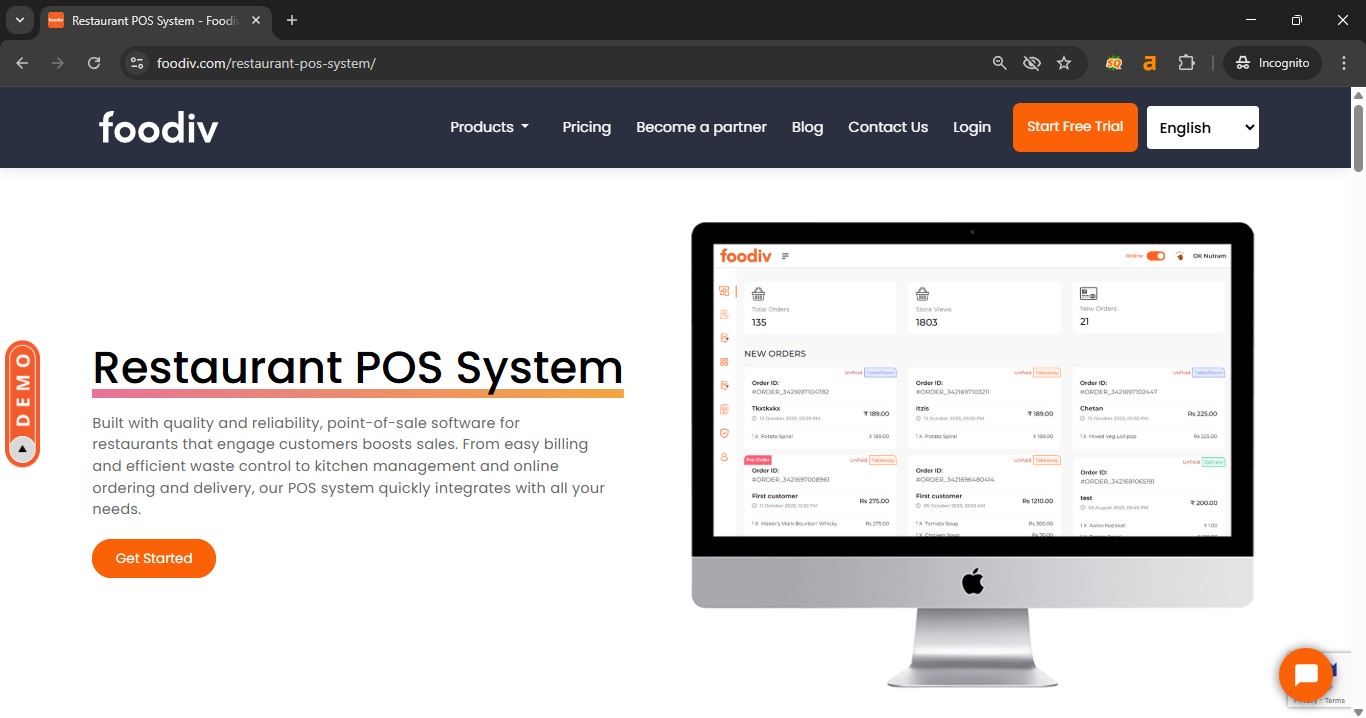
Foodiv earns the top spot because it solves the same core problems restaurants expect from Toast, while removing many of the common frustrations that push owners to switch in the first place. It focuses on control, clarity, and flexibility rather than locking restaurants into rigid systems.
Why Foodiv Is a Strong Alternative to Toast
Foodiv is built as an all in one restaurant operations platform. POS, online ordering, menu management, billing, and kitchen workflows work together in a single system. There is no need to stitch multiple tools or manage disconnected dashboards. What stands out is the absence of forced long term contracts. Restaurants stay because the system works for them, not because they are locked in. It is designed with independent and growing restaurants in mind, where adaptability matters more than brand prestige.
Best For
Foodiv works best for independent restaurants, multi location businesses, and brands that want commission free online ordering without sacrificing operational control.
Key Features
The platform includes POS, online ordering, menu management, billing, kitchen display systems, and clear reporting tools. Each feature supports daily operations instead of adding complexity.
Pricing Overview
Foodiv follows a transparent and flexible pricing model. Costs are clear upfront, and plans can scale as the restaurant grows without unexpected surprises.
2. Square for Restaurants
Square for Restaurants appeals to operators who value speed and clarity over complexity. It is built to get restaurants live quickly, without forcing teams to learn a complicated system before taking their first order.
Why Square Is a Strong Alternative to Toast
Square for Restaurants sits inside the larger Square ecosystem. POS, payments, and basic restaurant tools come together in one place. Setup is quick, and the interface feels familiar, even for staff who have never used a POS system before. That ease of entry is a big reason many small teams choose it.
Key points to know:
- Fast setup with minimal onboarding
- Clean and intuitive interface
- Tight integration with Square payments
Best For
Square for Restaurants works best for:
- Small restaurants and cafes
- Quick service and counter service setups
- Teams that want simple operations with clear pricing
- Businesses that do not want long term contracts
Strengths
The main strength is simplicity. Square removes friction from daily tasks and keeps pricing easy to understand.
Notable advantages include:
- Transparent pricing with no forced commitments
- Works on standard hardware, reducing upfront costs
- Easy integrations with payroll, inventory, and online payments
- Low learning curve for staff
Limitations vs Toast
As operations grow, some limits become clearer. Square does not go as deep into restaurant specific workflows as Toast.
Where Square can fall short:
- Limited support for advanced kitchen workflows
- Less flexibility for complex menu logic
- Multi location management is basic
- Scaling often requires add ons or external tools
What this really means is that Square is a strong choice for smaller or simpler operations. Restaurants with high volume, complex kitchens, or aggressive growth plans may eventually outgrow it.
3. Lightspeed Restaurant
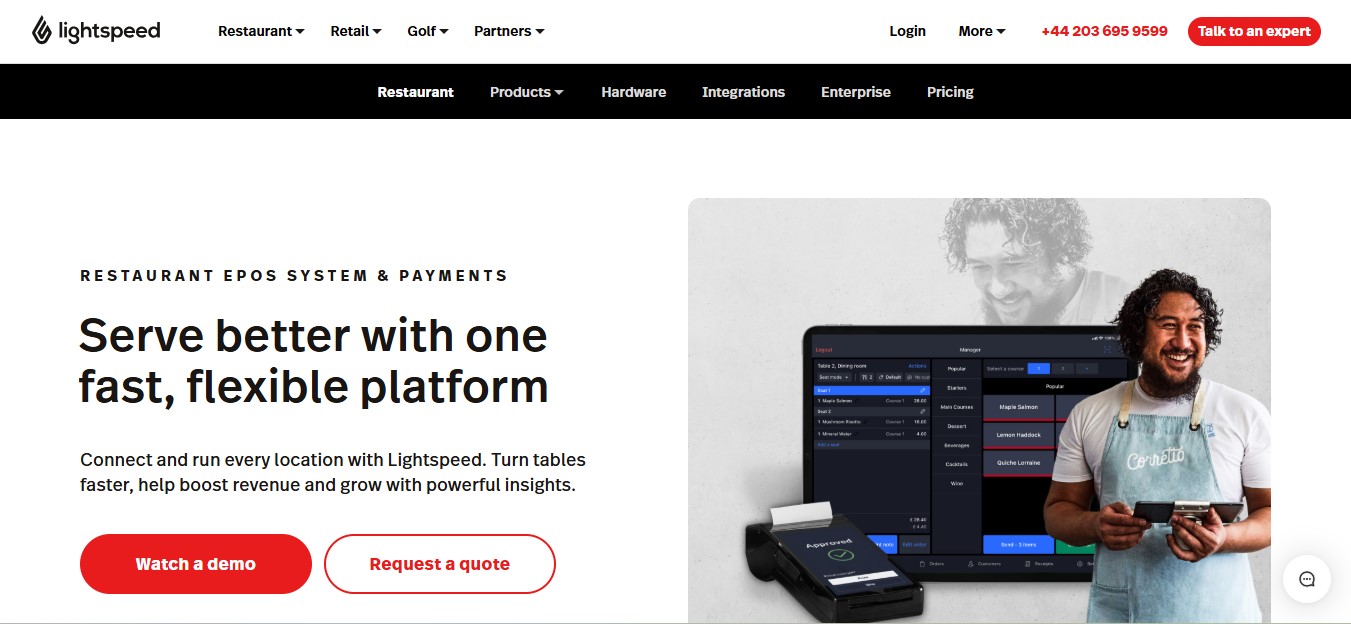
Lightspeed Restaurant is built for operators who need more control as their business grows. It leans toward structured operations and data driven decision making rather than quick setup or entry level simplicity.
Why Lightspeed Is a Strong Alternative to Toast
Lightspeed stands out as a strong alternative to Toast for restaurants that want more operational control without being locked into a rigid ecosystem. It offers deeper visibility into inventory, sales trends, and performance, which helps operators make informed decisions instead of relying on guesswork.
Where Lightspeed differs is flexibility. Restaurants can shape workflows around how they already operate rather than adjusting processes to fit the software. For growing businesses, this balance of structure and adaptability often feels more sustainable than systems that enforce fixed paths.
If you want, I can now:
- Integrate this smoothly into the full Lightspeed section
- Add a short comparison callout between Lightspeed and Toast
- Standardize this “Why it’s a strong alternative” section across all POS tools
Best For
Lightspeed works best for full service restaurants, multi location brands, and operators who want deeper insights into sales, inventory, and performance across their business.
Strengths
One of Lightspeed’s strongest areas is reporting. It provides detailed analytics that help owners track trends and manage costs. Inventory tools are also more advanced than most alternatives. The platform supports scalable operations without forcing restaurants to change how they already work.
Pricing Considerations
Lightspeed uses a subscription based pricing model with costs that increase as features and locations are added. While pricing is generally transparent, it can become higher than simpler systems, especially for restaurants that need advanced reporting and inventory features.
4. TouchBistro
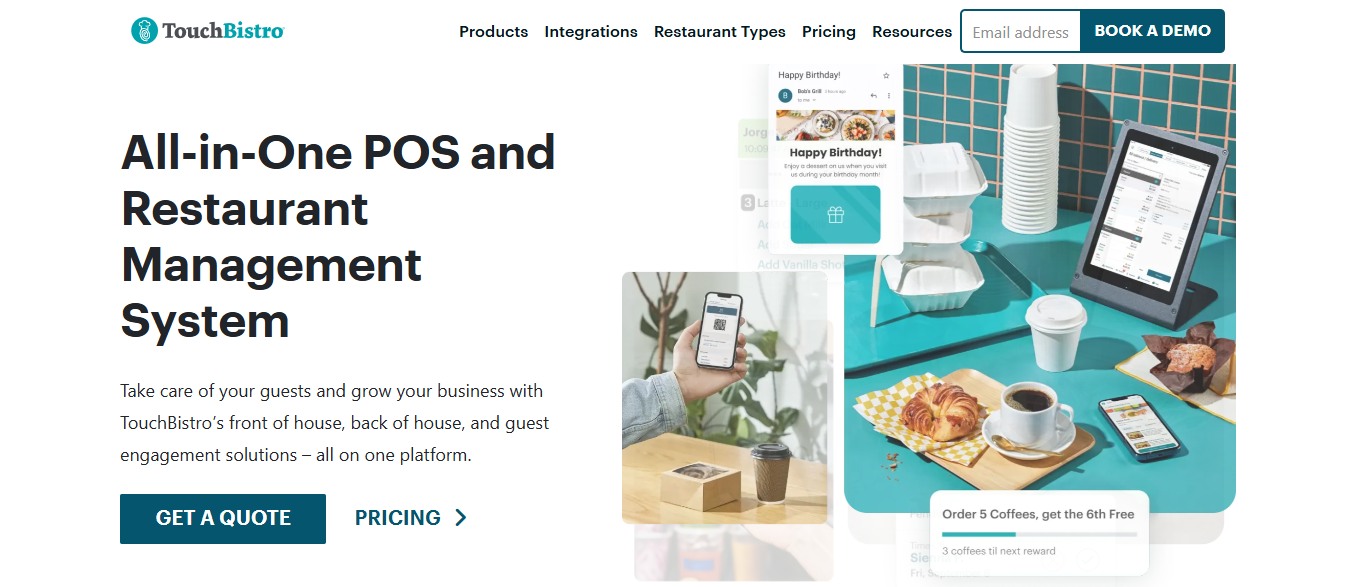
TouchBistro is often chosen by restaurants that care deeply about how service actually runs on the floor. It focuses less on processing payments and more on keeping table service organized during busy shifts.
Why TouchBistro Is a Strong Alternative to Toast
TouchBistro works well as an alternative to Toast for restaurants that prioritize dine in service and front of house flow. Its table first design makes it easier for staff to manage seating, courses, and order pacing without getting in the way.
For teams used to working from floor plans and sections, TouchBistro feels intuitive. It supports structured service instead of forcing restaurants into a one size fits all workflow, which can be refreshing for traditional dining setups.
Best For
TouchBistro is a strong fit for:
- Full service restaurants with table service
- Bars and pubs with structured seating
- Hospitality focused venues that rely on staff coordination
Core Features
TouchBistro includes the key tools needed for dine in operations:
- Table and floor plan management
- Menu customization with modifiers
- Order routing to kitchen and bar
- Staff roles and permission controls
- Basic reporting for sales and service performance
Additional tools such as payments, online ordering, and reservations are available through integrations.
Where It Falls Short
The limitations tend to show as operations grow.
- Many advanced features rely on third party integrations
- Managing everything from a single dashboard is not always possible
- Multi location management and deeper analytics are limited
- Costs can rise as more add ons are needed
For restaurants looking for an all in one platform, these gaps are worth considering before committing.
5. Clover POS
Clover POS is often considered by restaurants that want flexibility in hardware and setup without committing to a rigid system. It sits somewhere between simplicity and customization, depending on how it is configured.
Why Clover Is a Strong Alternative to Toast
Clover stands out as a Toast alternative for restaurants that want more choice in how their POS is built. Instead of locking users into a fixed workflow, Clover allows restaurants to add features through apps and hardware options based on what they actually need.
This modular approach works well for operators who want control over payments, devices, and add ons without being forced into a single ecosystem. For some restaurants, that flexibility feels less restrictive than Toast’s more tightly controlled setup.
Best For
Clover is a good fit for:
- Small to mid sized restaurants
- Quick service and counter service setups
- Businesses that want hardware flexibility
- Owners who prefer a build as you go POS
Core Features
Clover offers a solid foundation with room to expand:
- POS and payment processing
- Inventory and item management
- Employee and shift management
- App marketplace for added functionality
- Multiple hardware options for different service styles
Restaurants can tailor the system by selecting apps for online ordering, loyalty, reporting, and more.
Where It Falls Short
Clover’s flexibility can also create trade offs.
- Experience depends heavily on chosen apps
- Costs can increase as more features are added
- Support quality may vary by reseller
- Complex restaurant workflows may need workarounds
For restaurants that want everything tightly integrated from day one, Clover may require more setup and ongoing management.
6. Revel Systems
Revel Systems is usually considered by restaurants that operate at scale or plan to get there. It is built for structure, consistency, and control rather than quick setup or lightweight use.
Why Revel Systems Is a Strong Alternative to Toast
Revel works well as an alternative to Toast for restaurants that need deeper operational oversight. It supports complex menus, large order volumes, and multi location management without forcing operators to simplify how they run their business.
What sets Revel apart is its focus on consistency across locations. Menus, pricing, reporting, and workflows can be standardized, which matters when teams and sites start to multiply. For growing brands, this level of control can feel more dependable than lighter POS systems.
Best For
Revel Systems is a strong fit for:
- High volume restaurants
- Multi location and franchise businesses
- Restaurants with complex menus and workflows
- Operators who value detailed reporting and control
Core Features
Revel includes a wide range of tools designed for larger operations:
- POS with advanced menu and modifier logic
- Inventory and ingredient tracking
- Centralized reporting across locations
- Employee and role management
- Kitchen and order flow controls
The system is designed to handle operational complexity without breaking under pressure.
Where It Falls Short
Revel’s strength can also be its drawback.
- Setup and onboarding take time
- Costs are higher than simpler POS systems
- The system may feel heavy for small teams
- Not ideal for restaurants that want quick deployment
For restaurants that need depth and scalability, these trade offs often make sense. For smaller operations, they may feel unnecessary.
7. SpotOn POS
SpotOn POS is often chosen by restaurants that want strong support without getting buried in complexity. It focuses on service, guidance, and practical tools rather than overwhelming teams with too many options.
Why SpotOn Is a Strong Alternative to Toast
SpotOn works well as a Toast alternative for restaurants that want hands on support and clearer pricing. Instead of pushing a rigid system, SpotOn emphasizes onboarding, training, and ongoing assistance. For many operators, that level of involvement makes switching POS systems feel far less risky.
Another reason SpotOn stands out is its balance. It offers the core features restaurants expect from a modern POS while keeping the experience approachable. This can feel more flexible than Toast for teams that value support as much as software.
Best For
SpotOn is a good fit for:
- Independent restaurants and small chains
- Full service and quick service restaurants
- Operators who want guided onboarding and training
- Businesses that value responsive support
Core Features
SpotOn provides the essential tools needed to run daily operations:
- POS and payment processing
- Online ordering and customer engagement tools
- Menu and order management
- Reporting and performance insights
- Loyalty and marketing features
The platform aims to cover everyday needs without adding unnecessary complexity.
Where It Falls Short
SpotOn may not suit every operation.
- Advanced customization is limited compared to enterprise systems
- Multi location control is less flexible at scale
- Some features may feel basic for complex workflows
For restaurants with straightforward needs and a focus on support, these limits are often acceptable.
8. Aireus POS
Aireus POS is typically considered by restaurants that want a modern system with a strong focus on automation. It is positioned as a POS that reduces manual work rather than adding more steps to daily operations.
Why Aireus Is a Strong Alternative to Toast
Aireus works as a Toast alternative for restaurants that want smarter workflows without overcomplicating the setup. The system leans heavily on automation to handle routine tasks, which can help teams move faster during busy hours.
Where Aireus stands out is its emphasis on using data to guide decisions. Instead of relying only on static reports, the platform highlights patterns and insights that help owners understand what is actually happening in their business. For some restaurants, this feels more forward looking than Toast’s traditional approach.
Best For
Aireus is a good fit for:
- Restaurants looking to reduce manual processes
- Tech friendly teams open to automation
- Growing restaurants that want data driven insights
- Operators interested in newer POS platforms
Core Features
Aireus includes tools designed to streamline operations:
- POS with automated workflows
- Menu and order management
- Real time reporting and insights
- Payment processing and integrations
- Tools focused on operational efficiency
The system aims to simplify decision making rather than overwhelm users with raw data.
Where It Falls Short
As a newer platform, Aireus has some limitations.
- Smaller ecosystem compared to established POS systems
- Fewer third party integrations
- May require adjustment for teams used to traditional workflows
For restaurants comfortable with change, these trade offs may be worth it.
9. Butter POS
Butter POS is built for restaurants that want speed and simplicity without giving up control. It keeps things light and focused, which makes it appealing to teams that prefer a POS that stays out of the way during service.
Why Butter Is a Strong Alternative to Toast
Butter works well as an alternative to Toast for restaurants that do not need heavy enterprise features. It removes much of the complexity that comes with larger systems and replaces it with a cleaner, more straightforward experience.
What sets Butter apart is how easy it feels to use day to day. Orders move quickly, staff training is short, and the system does not require constant adjustments. For smaller teams, this can feel more practical than managing a feature heavy platform.
Best For
Butter is a good fit for:
- Small restaurants and cafes
- Quick service and counter service operations
- Teams that want fast onboarding
- Businesses that value simplicity over customization
Core Features
Butter focuses on essential restaurant tools:
- POS and payment processing
- Simple menu and order management
- Staff and shift controls
- Basic reporting and sales tracking
The platform is designed to handle daily service without unnecessary layers.
Where It Falls Short
Butter may not scale well for every restaurant.
- Limited advanced features
- Not ideal for multi location management
- Fewer customization options for complex menus
- Basic reporting compared to larger systems
For restaurants with straightforward operations, these limits are often acceptable.
10. Restroworks
Restroworks is built for restaurant brands that operate across multiple locations and need tighter control over operations. It focuses less on surface level convenience and more on managing complexity behind the scenes.
Why Restroworks Is a Strong Alternative to Toast POS
Restroworks works as a Toast alternative for restaurants that need deeper operational structure. It is designed to handle multi outlet workflows, centralized control, and consistency across locations. For brands that are scaling, this level of oversight can feel more dependable than lighter POS systems.
What really sets Restroworks apart is its emphasis on standardization. Menus, pricing, inventory, and reports can be managed centrally, which reduces confusion and manual work as the business grows. For operators who think in systems, this approach often feels more practical than Toast’s more front facing focus.
Best For
Restroworks is a good fit for:
- Multi location restaurant brands
- Cloud kitchens and delivery focused operations
- Franchises that need centralized control
- Restaurants with complex operational workflows
Core Features
Restroworks offers tools aimed at managing scale:
- POS with centralized menu and pricing control
- Inventory and supply chain management
- Kitchen and order workflow management
- Detailed reporting across outlets
- Integrations for delivery and online ordering
The platform is designed to support operational consistency rather than just speed at the counter.
Where It Falls Short
Restroworks may feel heavy for smaller teams.
- Setup and configuration can take time
- Interface may feel complex for single location restaurants
- More features than needed for simple operations
For growing brands, these trade offs are often worth it. For small restaurants, they may feel unnecessary.
Quick Comparison of the Best Toast Competitors
| POS System |
Best For |
Key Strength |
Pricing Model |
Hardware Flexibility |
| Foodiv POS |
Independent and multi-location restaurants |
All-in-one platform with no forced contracts |
Transparent and flexible |
High |
| Square for Restaurants |
Small restaurants and quick service |
Simple setup and clear pricing |
Flat rate with no contracts |
High |
| Lightspeed Restaurant |
Full service and growing brands |
Advanced reporting and inventory control |
Subscription based |
Medium |
| TouchBistro |
Dine-in and table service restaurants |
Strong floor and table management |
Subscription plus add-ons |
Medium |
| Clover POS |
Small to mid sized restaurants |
Modular setup with app marketplace |
Varies by reseller |
High |
| Revel Systems |
High volume and franchise operations |
Enterprise-grade control and scalability |
High cost subscription |
Low |
| SpotOn POS |
Independent restaurants needing support |
Hands-on onboarding and service |
Custom pricing |
Medium |
| Aireus POS |
Automation-focused restaurants |
Workflow automation and insights |
Subscription based |
Medium |
| Butter POS |
Small and quick service restaurants |
Fast and simple operations |
Simple subscription |
Medium |
| Restroworks |
Multi-location and cloud kitchen brands |
Centralized control and standardization |
Enterprise pricing |
Low |
How to Choose the Right Toast POS Alternative for Your Restaurant
Once you decide to move on from Toast, the next step is choosing a system that actually fits how your restaurant runs. This is where many owners slow down, and for good reason. The right choice depends on practical details, not feature lists.
Here is how to think through the decision.
Restaurant Size and Service Type
Start with how your restaurant operates today.
- Small cafes and quick service spots usually need speed and simplicity
- Full service restaurants depend on table flow and staff coordination
- Multi location brands need consistency and centralized control
A POS that works well for one model can feel frustrating in another.
Online Ordering Needs
Online orders are no longer optional for most restaurants.
- Commission free ordering protects margins
- Menu and pricing should stay in sync with POS
- Orders should flow directly to the kitchen without manual steps
If online ordering is a priority, make sure it is built in rather than bolted on.
Hardware Flexibility
Hardware choices affect cost and flexibility.
- Systems that support standard devices lower upfront investment
- Proprietary hardware limits options and increases dependency
- Easy replacements reduce downtime during service
Flexibility here matters more than it seems.
Budget and Pricing Transparency
Clear pricing prevents surprises later.
- Understand subscription costs upfront
- Ask about processing fees and add ons
- Check how pricing scales with locations and volume
A lower starting price does not always mean lower long term cost.
Support and Onboarding
Switching POS systems is a big move.
- Guided onboarding reduces risk
- Training helps staff adapt quickly
- Reliable support matters during peak hours
Strong support often makes the difference between a smooth transition and a stressful one.
Choosing the right toast pos alternative is less about finding the most popular system and more about finding the one that fits your restaurant now and as it grows.
What To Look For In Toast Competitors
When looking at Toast competitors, the goal is not just to switch software. It is about finding a system that actually fits how a restaurant runs every day. Some places struggle with high fees. Others need better online ordering or simpler tools for staff. The right POS should solve real problems, not add new ones.
Before making a decision, it helps to focus on what really impacts daily operations and long term growth. Here are the key things worth paying attention to:
• Clear and simple pricing so there are no surprises later with hidden fees or long contracts
• Flexible hardware options that allow the use of devices that match the restaurant setup and budget
• Strong online ordering support for takeout, delivery, and direct customer orders
• Easy to use interface so staff can learn quickly and avoid mistakes during busy hours
• Smooth integrations with payments, kitchen systems, loyalty programs, and other tools
• Simple menu and order management to handle updates, modifiers, and special requests without hassle
• Support for multiple locations if there are plans to grow or expand operations
• Useful reporting and analytics to understand sales trends, peak times, and customer behavior
• Reliable customer support that responds quickly when something goes wrong
• Ability to scale as the business grows without needing to switch systems again
Choosing the right Toast alternative becomes much easier when the focus stays on everyday needs. The best system is the one that makes operations smoother, helps staff work faster, and improves the overall customer experience.
Explore These Blogs
Final Thoughts: The Right Toast Alternative for Your Restaurant
Toast is a strong POS system, and for many restaurants it does exactly what it promises. But it is not the right fit for every operation. As restaurants grow, change service models, or look more closely at costs and flexibility, the limits become easier to see.
The good news is that there are many modern toast competitors that offer different approaches. Some focus on lower costs and simpler setup. Others prioritize flexibility, modular features, or stronger support. Each option solves a slightly different problem.
What this really comes down to is fit. The right POS system is the one that matches how your restaurant operates today and where it plans to go next. Brand name matters far less than clarity, control, and long term usefulness.
FAQs About Toast Competitors
There isn’t one universal “best” alternative because every restaurant has different needs. For many independent and growing restaurants, Foodiv POS stands out because it combines core tools like POS, online ordering, menu management, and reporting without forcing long contracts. For smaller cafes or quick service spots that want simple setup and clear pricing, Square for Restaurants can be a great fit. Full service operations may prefer systems like Lightspeed or TouchBistro for deeper control over floor and inventory. The best choice is the one that fits how your restaurant actually runs and what challenges you need the system to solve.
Yes, there are systems that can cost less than Toast depending on how you use them. Some providers offer simpler pricing models with lower base fees, fewer mandatory add-ons, or the ability to choose only the features you need. For example, Square for Restaurants is often easier on the budget for small teams because it has clear pricing and no long term contracts. Butter POS and Aireus POS can also be more affordable for restaurants that don’t need advanced enterprise features. That said, “cheaper” isn’t always better if it means sacrificing tools your team relies on. Always look at total cost of ownership, including hardware, processing fees, and any add-ons you’ll need.
There isn’t a single POS that’s best for all small restaurants, but some systems tend to fit smaller teams better because they are easy to learn, inexpensive to start with, and don’t require heavy setup.
Good options for small restaurants often include:
- Square for Restaurants — simple to set up, clear pricing, and works on standard hardware.
- Butter POS — lightweight and focused on essential features.
- Foodiv POS — flexible pricing and tools that grow with the restaurant.
When choosing, focus on what your team actually uses every day. A system that feels easy for staff and keeps costs transparent usually works better than one with more features than you need.
In most cases, yes — but it depends on what data you want to keep and the new POS you choose.
Here’s how it usually works:
- Menu data — most POS systems allow you to export your menu and import it into the new system.
- Sales history — you can export reports from Toast as spreadsheets, but not all systems will let you import that data directly.
- Customer and loyalty data — some systems support data transfer, but others do not. This varies by provider.
What this really means is that you should plan your data move before switching. Export everything Toast offers, ask your new provider what they can import, and be prepared to reconfigure some settings. A smooth transition usually comes from planning the data move ahead of time rather than doing it on the fly.