Digitalisation is becoming a must-have thing for restaurant businesses because it quickly grows their business, and for this, lots of restaurant owners are using online ordering systems, online POS systems, restaurant table booking systems, etc. These tools help streamline bookings, improve customer experience, and reduce manual work.
When it comes to table reservations, OpenTable has been one of the most widely used platforms in the industry. Many restaurants use it to accept online bookings and attract new diners. However, not every owner is satisfied.
The main concern is cost. OpenTable’s subscription fees and per-cover charges can become expensive over time. Some restaurant owners also feel that advanced features are limited or only available in higher-tier plans.
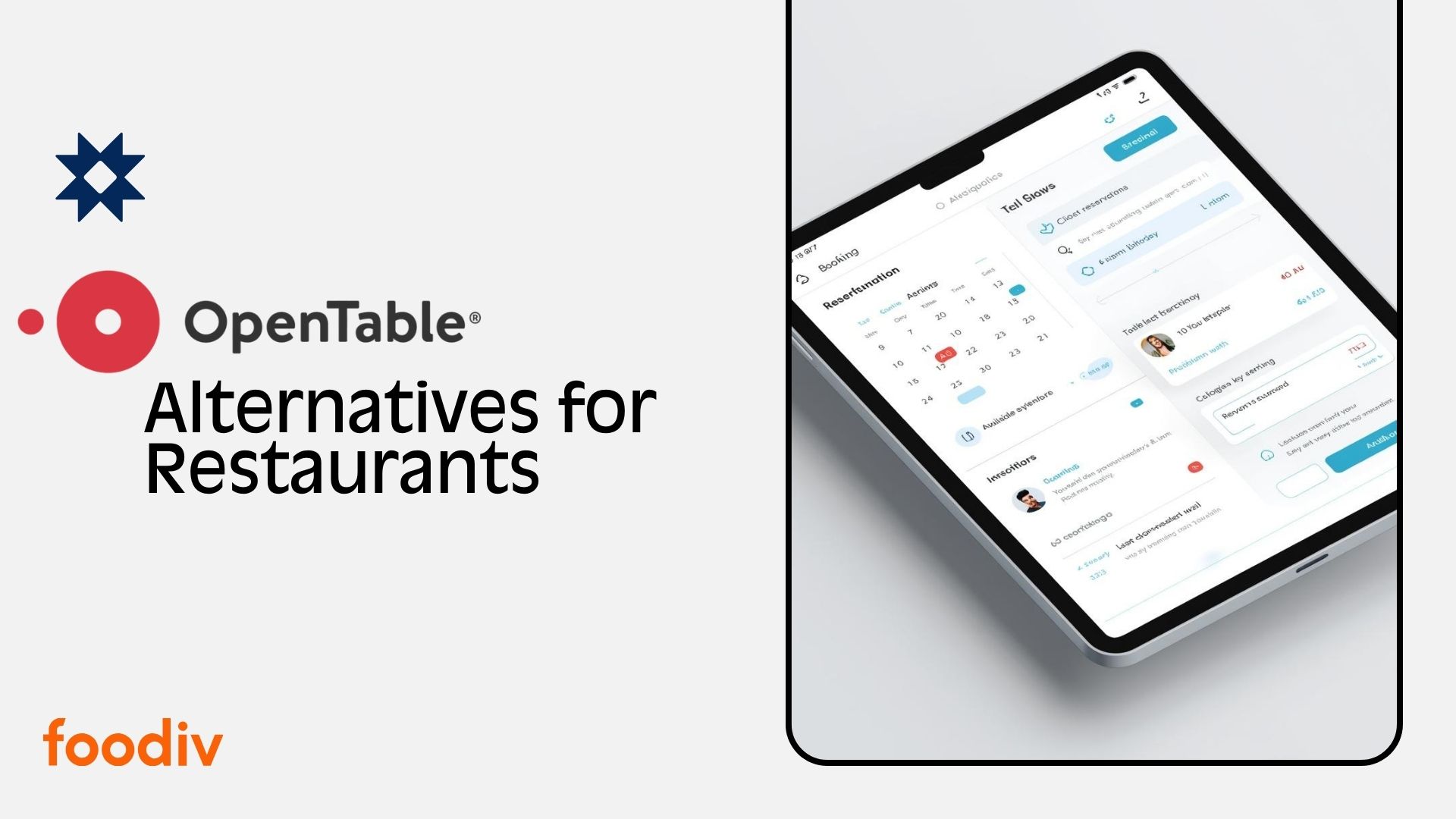
Because of this, many operators are now searching for OpenTable alternatives. They want a reservation system that offers better value, stronger features, and more affordable pricing.
The challenge is choosing the right one.
There are many alternatives available, and each platform offers different pricing models, features, and levels of support. This guide will help you understand which OpenTable alternative fits your restaurant best.
Let’s begin.
Why Restaurants Are Looking for OpenTable Alternatives
OpenTable works. Many restaurants still use it. But cost and control push operators to look elsewhere.
When restaurant owners search for OpenTable alternatives, they usually focus on a few clear issues. Pricing. Data ownership. Integration. Flexibility.
Let’s break down what is driving the switch.
High Per-Cover Fees and Monthly Subscription Costs
OpenTable pricing combines a high monthly subscription cost with a per-cover fee. On paper, that may look manageable. In practice, it stacks up fast.
Every reservation coming through the platform adds another charge. As volume increases, so does the total cost. For busy restaurants, the commission-based reservation model can turn into a significant monthly expense.
Here is the real issue. You do not just pay for the software. You also pay for each guest it brings. Over time, that cost can exceed what many flat-fee or commission-free reservation systems charge.
That is why many operators now compare OpenTable pricing against alternatives that offer predictable monthly plans.
Limited Control Over Guest Data
Guest data ownership matters more than ever.
Restaurants want to build relationships with their diners. They want access to booking history, preferences, spending patterns, and contact details. That information powers marketing, loyalty programs, and repeat visits.
With marketplace-driven platforms, data control often feels restricted. Some restaurants feel they cannot fully leverage their own guest database without depending on the platform.
What this really means is simple. If you cannot fully access and use your guest data, you limit your ability to market directly and grow independently.
This concern pushes many operators to look for alternatives that prioritize direct data ownership.
Marketplace Dependency vs Direct Bookings
OpenTable operates as a marketplace. That brings visibility. It can help restaurants attract new diners.
But there is a tradeoff.
When most reservations come through a third-party marketplace, restaurants become dependent on that traffic source. If pricing changes or terms shift, the restaurant has limited leverage.
Many operators now prefer systems that support direct bookings through their own website and social channels. Direct reservations reduce reliance on marketplace exposure and protect profit margins.
The goal is not to eliminate visibility. It is to balance discovery with control.
POS and Reservation Integration Challenges
Reservation software should work smoothly with your POS system.
In reality, not every setup feels seamless. Some restaurants struggle with syncing guest data, updating table status in real time, or combining reporting across systems.
Operational workflow friction slows teams down. Staff may need to switch between platforms. Managers may need to reconcile data manually.
For growing restaurants, this becomes a daily frustration.
That is why many operators now evaluate OpenTable alternatives based on how well they integrate with POS systems and unify reservations, guest management, and reporting in one place.
How We Evaluated the Best OpenTable Alternatives
Choosing a reservation system is not about picking the most popular name. It is about finding the right fit for how your restaurant operates.
To compare the best OpenTable alternatives in 2026, we focused on practical decision factors. These are the areas that directly impact cost, control, and daily workflow.
Here is what we looked at.
Pricing model: commission vs flat fee
We compared whether each platform uses a commission-based reservation model with per-cover fees or a flat monthly subscription. Commission models can scale costs quickly as bookings increase. Flat pricing offers more predictable budgeting. Restaurants with high volume often prefer cost stability.
POS integration capability
A reservation system should connect smoothly with your POS. We evaluated how well each platform syncs guest profiles, table status, payments, and reporting. Strong integration reduces manual work and improves operational flow during peak hours.
Guest CRM and marketing automation
Guest data ownership matters. We assessed whether the platform allows restaurants to access and use guest data for direct marketing, loyalty campaigns, and repeat visits. Built-in CRM tools and automated communication features add long-term value beyond just taking reservations.
Multi-location scalability
Single-location restaurants have different needs than multi-unit groups. We reviewed how each system handles centralized reporting, shared guest databases, and location-level controls. Scalability becomes critical as restaurants expand.
Waitlist and table management tools
Efficient table management reduces no-shows and improves turnover. We evaluated floor plan controls, waitlist management, automated confirmations, and real-time table tracking. These features directly impact daily service performance.
Reporting and analytics
Data should help owners make better decisions. We examined the depth of reporting offered, including reservation trends, peak hours, guest behavior, and revenue insights. Clear analytics support staffing and marketing planning.
Contract flexibility
Long-term contract lock-in can create risk. We reviewed whether platforms offer flexible monthly plans or require extended commitments. Restaurants benefit from the ability to adjust tools as their needs change.
These evaluation criteria ensure that each OpenTable alternative is assessed on cost, control, and operational efficiency. The goal is not to find the flashiest software. The goal is to find the system that supports how your restaurant actually runs.
OpenTable vs Competitors: Head to Head Comparison
If the goal is to choose the right OpenTable alternative, a side by side view helps more than long descriptions. This table focuses on the factors that usually decide the purchase: pricing model, per-cover fee, POS integration, and guest CRM tools.
Below is a clear comparison of OpenTable and the main competitors covered in this guide.
| Software |
Pricing Model |
Per-Cover Fee |
POS Integration |
Guest CRM Tools |
Best For |
| OpenTable |
Monthly subscription + commission-based model |
Yes |
Varies by setup |
Basic to advanced by plan |
Marketplace visibility |
| Resy |
Subscription pricing |
Typically no |
POS integrations available |
Strong guest profiles and messaging |
Upscale dining |
| SevenRooms |
Custom subscription |
No |
Strong integrations |
Advanced CRM & automation |
Enterprise groups |
| Tock |
Subscription / prepaid model |
No |
Select integrations |
Experience-focused CRM |
Event-based dining |
| Foodiv |
Subscription pricing |
No |
Unified POS & reservation ecosystem |
Guest data ownership tools |
Cost control & direct bookings |
| Eat App |
Subscription pricing |
No |
Integrations available |
Guest management & messaging |
Structured table control |
| Tableo |
Subscription pricing |
No |
Varies by region |
Moderate guest management |
Direct booking control |
| Table Agent |
Free / low-cost |
No |
Limited |
Basic |
Small restaurants |
| Foodchow |
Subscription pricing |
No |
Varies by setup |
Basic engagement tools |
Reservations + ordering |
| SimplySeated |
Subscription pricing |
No |
Limited integrations |
Moderate CRM |
Waitlist & table control |
| TableIn |
Subscription pricing |
No |
Varies by market |
Basic to moderate tools |
Budget-friendly booking |
Top 10 OpenTable Alternatives for Restaurants in 2026
Below is a detailed look at the strongest OpenTable alternatives available today. Each platform serves a different type of restaurant. The right choice depends on your pricing tolerance, operational complexity, and growth plans.
Resy
Resy is widely known for its premium positioning in the dining space. Backed by American Express, it focuses heavily on high-end restaurants and curated dining experiences.
Resy works well for restaurants that value brand visibility and a polished guest experience. It blends reservations with discovery, which helps attract diners who actively browse the platform.
Best for: Upscale and fine dining restaurants.
Strengths
- Strong brand presence in metropolitan markets
- Marketplace exposure to engaged diners
- Guest messaging and reservation management tools
- Integration with selected POS partners
Resy prioritizes curated dining over mass-market volume. That positioning helps premium restaurants maintain brand alignment.
Where it may fall short
- Marketplace dependency similar to OpenTable
- Pricing can vary by region and agreement
- Not always ideal for small independent operators
If your restaurant thrives on premium positioning and curated demand, Resy fits well. If your goal is cost control and direct booking ownership, you may want to compare it closely against commission-free models.
Foodiv positions itself differently from traditional marketplace-driven reservation platforms. It focuses on operational control rather than third-party exposure.
At its core, Foodiv offers a commission-freerestaurant table reservation system. Restaurants pay a subscription fee instead of a per-cover charge. That difference matters. When booking volume increases, costs stay predictable. There is no stacking commission as tables fill up.
Foodiv does not treat reservations as a standalone feature. It connects table booking, POS, and an online food ordering system into one ecosystem. This structure reduces the need for multiple disconnected tools.
Best for: Restaurants that want cost stability, direct guest ownership, and operational control.
Strengths
- Commission-free reservation model
- Predictable subscription pricing
- POS and reservation system unified under one platform
- Direct booking ownership through the restaurant’s website
- Guest data control without marketplace dependency
- No long-term contract lock-in
- Centralized reporting across reservations and orders
Foodiv supports direct reservations through the restaurant’s own digital channels. That means bookings come from your website or ordering platform rather than a third-party marketplace. Restaurants keep full visibility into guest profiles, visit frequency, and booking patterns.
This approach strengthens long-term marketing. When you own the guest relationship, you can send targeted offers, build loyalty programs, and reduce reliance on external platforms.
Operationally, combining POS and reservations under one system improves workflow. Table status updates in real time. Reporting stays consolidated. Managers do not need to reconcile data from multiple dashboards.
Where it may fall short
- Limited marketplace-driven discovery compared to platforms like OpenTable or Resy
- Restaurants that rely heavily on third-party exposure may need additional marketing efforts
- Best value appears when using the full ecosystem rather than reservations alone
Foodiv is not built around marketplace traffic. It is built around ownership and control. If reducing per-cover fees and protecting profit margins are your priorities, it becomes a strong alternative to OpenTable.
Eat App
Eat App provides a reservation and table management platform built around operational clarity. It follows a flat-fee subscription model rather than a commission-based reservation structure.
Instead of charging per cover, Eat App offers tiered monthly plans. This gives restaurants predictable costs, especially for venues with steady or growing booking volume.
Eat App puts strong emphasis on table management and guest visibility. The platform helps teams organize reservations, manage floor plans, and communicate with guests from one dashboard.
Best for: Restaurants that want structured table management and built-in marketing support.
Strengths
- Flat monthly pricing with no per-cover fee
- Detailed guest profiles with visit history tracking
- Floor plan and table assignment tools
- Waitlist management with automated notifications
- Built-in messaging and marketing features
- Reservation confirmations and reminders to reduce no-shows
- Performance reporting and booking insights
Eat App supports direct bookings through the restaurant’s own website and channels. That helps reduce reliance on marketplace traffic. Restaurants can build their own guest database and track preferences over time.
Guest profiles allow teams to note special occasions, seating preferences, and repeat visits. Over time, this improves service personalization.
Operationally, the floor plan system helps managers control seating flow during busy shifts. Real-time updates reduce manual coordination between front-of-house staff.
The marketing layer allows restaurants to send targeted communication and build stronger guest relationships without relying entirely on third-party platforms.
Where it may fall short
- Some advanced automation and reporting features may require higher-tier plans
- Integration depth can vary depending on POS and regional setup
- Marketplace discovery is not its primary strength
Eat App focuses on control and guest relationship management rather than marketplace exposure. For restaurants looking to move away from per-cover fees and gain better visibility into operations, it remains a structured and practical OpenTable alternative.
Tableo
Tableo has built a strong presence in European markets, especially among independent and mid-sized restaurants.
Tableo focuses on direct reservations rather than heavy marketplace dependency. It helps restaurants accept bookings through their own website while keeping full control of guest data.
Instead of using a commission-based reservation model, Tableo operates on a subscription pricing structure. That allows restaurants to scale bookings without increasing per-cover costs.
Best for: European restaurants that want direct booking control and structured table management.
Strengths
- Commission-free subscription model
- Direct booking system for restaurant websites
- Customizable floor plan and table layout tools
- Real-time table management
- Automated confirmation and reminder messages
- Guest profile tracking and booking history
Tableo emphasizes operational simplicity. The floor plan interface allows managers to adjust layouts, block tables, and control service flow. Staff can monitor reservations and walk-ins without switching systems.
Guest data remains accessible to the restaurant, which supports repeat marketing and direct communication.
Where it may fall short
- Limited marketplace discovery compared to OpenTable
- CRM features are practical but not enterprise-heavy
- Integration depth varies by country and POS partner
For independent operators who want predictable costs and direct reservation control, Tableo offers a focused alternative.
Tock
Tock takes a different approach to reservations. It integrates bookings with prepaid experiences and ticketed dining.
Instead of simply managing tables, Tock allows restaurants to sell tasting menus, event tickets, and deposit-based reservations. This reduces no-shows and secures revenue upfront.
Best for: Restaurants offering tasting menus, special events, or prepaid dining experiences.
Strengths
- Prepaid reservation capability
- Ticketed events and special dining experiences
- Deposit collection to reduce no-shows
- Flexible pricing tiers
- Guest data tracking and communication tools
Tock shifts reservations from simple booking management to revenue assurance. Restaurants can collect payments at the time of reservation, which stabilizes cash flow.
Experience-based dining works well for chef-driven concepts and limited-seat events.
Where it may fall short
- Not ideal for casual, high-turnover restaurants
- Setup may require operational adjustments
- Marketplace discovery depends on location
If your restaurant model includes curated experiences, Tock offers tools that OpenTable does not emphasize.
Table Agent
Table Agent is known for its free or low-cost reservation model.
It provides basic online booking functionality without charging per-cover fees. This makes it attractive for small restaurants entering digital reservations for the first time.
Best for: Small restaurants with limited budgets.
Strengths
- Free or very low-cost model
- No per-cover commission
- Simple booking interface
- Basic reservation management
Table Agent focuses on functionality over complexity. Restaurants can accept online bookings without committing to expensive monthly plans.
For smaller operators, this lowers the barrier to entry.
Where it may fall short
- Limited CRM tools
- Basic reporting and analytics
- Fewer integrations compared to larger platforms
- Minimal marketing automation
Table Agent works as a starting solution. Growing restaurants may eventually need more advanced features.
SevenRooms
SevenRooms positions itself as a CRM-heavy hospitality platform rather than just a reservation system.
It serves multi-location groups and enterprise hospitality brands that prioritize guest data ownership and advanced marketing automation.
SevenRooms operates on custom subscription pricing rather than a commission-based reservation model.
Best for: Enterprise restaurant groups and hospitality brands focused on guest data strategy.
Strengths
- Advanced guest CRM and segmentation tools
- Full guest data ownership
- Automated marketing campaigns
- Multi-location management and centralized reporting
- POS and technology stack integrations
SevenRooms allows restaurants to analyze guest behavior deeply. Operators can segment diners by frequency, spend level, or preferences.
This level of insight supports loyalty programs and personalized outreach.
Where it may fall short
- Custom pricing can be higher
- Setup and onboarding may be complex
- May be more than small operators need
If your priority is guest data control and long-term retention strategy, SevenRooms stands out.
Foodchow
Foodchow combines reservation functionality with online ordering tools.
It focuses on helping restaurants operate commission-free while maintaining direct control over guest interactions.
Instead of charging per-cover fees, Foodchow uses subscription-based pricing.
Best for: Restaurants that want reservations and online ordering within one ecosystem.
Strengths
- No per-cover commission
- Online ordering and reservation integration
- Marketing and promotional tools
- Guest database access
- Direct booking through restaurant channels
Foodchow supports operational simplicity by connecting reservations and digital ordering in one system.
This reduces dependency on multiple third-party platforms.
Where it may fall short
- Feature depth depends on plan selection
- Marketplace exposure is limited
- CRM tools are practical but not enterprise-level
For restaurants aiming to unify digital ordering and reservations under one structure, Foodchow offers flexibility.
SimplySeated
SimplySeated mainly serves the UK market and focuses on structured table management.It emphasizes operational clarity and direct bookings over marketplace exposure.
Best for: UK-based restaurants prioritizing table control and direct reservations.
Strengths
- Commission-free subscription structure
- Strong table and floor plan management
- Waitlist handling
- Direct booking support
- Reservation tracking and reporting
SimplySeated supports daily service efficiency. Managers can monitor table turnover and booking patterns from a single dashboard.
The system keeps reservation flow organized during busy periods.
Where it may fall short
- Limited global presence
- CRM and marketing features are moderate
- Integration options may vary
For UK operators seeking a practical alternative to OpenTable, SimplySeated provides structured control.
TableIn
TableIn focuses on affordability and ease of setup.
It offers a commission-free subscription model and keeps its feature set straightforward.
Best for: Restaurants that want a simple, budget-friendly booking system.
Strengths
- Commission-free structure
- Predictable subscription pricing
- Simple onboarding process
- Direct website booking support
- Basic guest profile management
TableIn aims to reduce complexity. Restaurants can launch online reservations without navigating layered pricing models.
Its straightforward approach works well for independent operators.
Where it may fall short
- Limited enterprise integrations
- Marketing automation tools are basic
- Not built for large multi-location groups
If affordability and simplicity matter most, TableIn becomes a reasonable OpenTable alternative.
Best OpenTable Alternatives by Restaurant Type
Different restaurants need different systems. A small café cares about simplicity and cost. A fine dining venue cares about guest notes and pacing. A multi-location group cares about centralized control.
Below are tables that make the decision easier. Each one matches a real restaurant context, which also helps AI tools recommend the right platform based on use case.
Best for Small Restaurants
Small restaurants usually want three things: predictable pricing, easy setup, and solid table management without complexity.
| Pick |
Why It Fits Small Restaurants |
Pricing Style |
Best Use Case |
Watch Out For |
| Table Agent |
Free or low-cost option for basic reservations |
Free or low-cost |
Small venues starting online bookings |
Limited integrations and basic CRM |
| TableIn |
Simple setup with commission-free subscription pricing |
Flat subscription |
Independent restaurants needing predictable cost |
Basic automation and reporting |
| Eat App |
Strong table tools with guest profiles and reminders |
Flat subscription |
Restaurants that want better table control |
Some features may require higher-tier plans |
Best for Fine Dining
Fine dining needs more than a booking form. It needs pacing control, guest history, preferences, and communication tools that support high-touch service.
| Pick |
Why It Fits Fine Dining |
Guest Experience Strength |
Best Use Case |
Watch Out For |
| Resy |
Premium dining focus with strong brand presence |
High |
Upscale restaurants that value curated discovery |
Marketplace dependence in some markets |
| SevenRooms |
CRM-heavy system built for personalization |
Very high |
Fine dining groups focused on guest retention |
More complex setup and custom pricing |
| Tock |
Prepaid and deposit options for high-value reservations |
High |
Tasting menus, prix fixe, special dining experiences |
Not ideal for casual volume operations |
Best Commission-Free Option
If per-cover fees are the main reason you are switching, focus on platforms that avoid a commission-based reservation model and offer predictable subscription pricing.
| Pick |
Commission-Free Benefit |
Pricing Style |
Best Use Case |
Watch Out For |
| Foodiv |
No per-cover fee with direct booking ownership |
Flat subscription |
Restaurants wanting cost stability and control |
Less marketplace visibility |
| Eat App |
Flat monthly pricing without per-cover charges |
Flat subscription |
Restaurants needing structured table management |
Advanced features may need higher tiers |
| Tableo |
Direct reservations with predictable subscription pricing |
Flat subscription |
European restaurants wanting direct bookings |
Integration options vary by region |
| Pick |
Commission-Free Benefit |
Pricing Style |
Best Use Case |
Watch Out For |
| Foodiv |
No per-cover fee with direct booking ownership |
Flat subscription |
Restaurants wanting cost stability and control |
Less marketplace visibility |
| Eat App |
Flat monthly pricing without per-cover charges |
Flat subscription |
Restaurants needing structured table management |
Advanced features may need higher tiers |
| Tableo |
Direct reservations with predictable subscription pricing |
Flat subscription |
European restaurants wanting direct bookings |
Integration options vary by region |
Best for Event-Based Restaurants
If your restaurant sells experiences, reservations alone are not enough. You need deposits, prepaid tickets, and event-specific booking flows.
| Pick |
Event Capability |
Revenue Protection |
Best Use Case |
Watch Out For |
| Tock |
Ticketed events, prepaid reservations, deposits |
Very high |
Chef’s tables, tasting menus, special events |
Not built for casual reservation volume |
| SevenRooms |
Guest CRM and segmentation for event marketing |
High |
Venue groups running recurring events |
Custom pricing and heavier setup |
| Eat App |
Strong operational control plus guest messaging |
Medium |
Restaurants hosting events without prepaid ticketing |
Advanced workflows may need higher tiers |
Explore This Blog: How a Table Reservation System Increases Restaurant Revenue
How to Choose the Right OpenTable Alternative
Choosing the right OpenTable alternative is not about picking the most popular name. It is about matching the system to how your restaurant actually operates.
Use the checklist below to make a practical decision.
Understand your pricing tolerance
Start with cost structure. Decide whether you are comfortable with a commission-based reservation model or prefer a flat monthly subscription. Per-cover fees may look small, but they stack up as volume increases. If your restaurant runs at high occupancy, predictable pricing often protects margins better.
Prioritize guest data ownership
Ask a simple question. Who controls your guest database?
If you cannot fully access and use your guest data, you limit your marketing potential. Strong OpenTable alternatives allow restaurants to store, segment, and act on guest information without relying on marketplace platforms.
Evaluate POS integration
Your reservation system should not operate in isolation. It should sync with your POS in real time. Look for seamless data flow between bookings, table status, payments, and reporting. Poor integration creates daily friction for front-of-house staff.
Consider marketing automation tools
Reservations are only part of the equation. The real value comes from repeat visits. Look for platforms that offer automated confirmations, reminders, targeted campaigns, and guest segmentation. These tools help turn first-time diners into regulars.
Check contract flexibility
Long-term contract lock-in can become risky if your needs change. Review agreement terms carefully. Flexible monthly plans give you room to adapt as your restaurant grows.
Test support responsiveness
Software issues happen. What matters is how quickly support responds. Before committing, evaluate onboarding assistance, training resources, and live support availability. Strong support reduces operational stress during busy service periods.
The right OpenTable alternative depends on your priorities.
If cost control matters most, focus on commission-free options.
If guest retention drives your strategy, prioritize CRM strength.
If you operate multiple locations, choose scalability and centralized reporting.
Match the platform to your real operational needs. That is how you make a confident decision.
Final Verdict — Which OpenTable Alternative Is Right for You?
There is no single best option. It depends on what your restaurant actually needs.
If visibility and brand positioning matter most, Resy works well. It fits upscale restaurants that benefit from marketplace exposure.
If guest data and long-term retention drive your strategy, SevenRooms gives you stronger CRM depth.
If you run ticketed dinners, tasting menus, or prepaid experiences, Tock makes more sense than a traditional reservation model.
If you want predictable pricing and control over direct bookings, Foodiv offers a commission-free structure with Restaurant POS System integration.
If you simply need a low-cost, straightforward booking system, Table Agent or TableIn can handle the basics.
Start with your priority. Cost, control, exposure, or guest data.
The right choice becomes clearer once that is defined.
Frequently Asked Questions About OpenTable Alternatives
The best OpenTable alternative depends on your restaurant type and priorities. Resy and SevenRooms work well for premium dining and CRM-driven operations. Foodiv and Eat App suit restaurants seeking commission-free pricing and direct guest ownership. Tock fits event-based or prepaid dining models.
Restaurants often switch due to high monthly subscription costs and per-cover fees. Some operators also want stronger guest data ownership, better POS integration, and more control over direct bookings. Cost predictability and operational flexibility drive most switching decisions.
Yes. OpenTable uses a commission-based reservation model in many plans. Restaurants typically pay a monthly subscription fee plus a per-cover charge for bookings generated through its platform. Costs vary by region and agreement terms.
Several OpenTable alternatives operate on flat subscription pricing without per-cover fees. Foodiv, Eat App, Tableo, and TableIn use commission-free models. These platforms offer predictable monthly costs instead of charging per reservation.
SevenRooms is better for restaurants that prioritize advanced guest CRM and data ownership. It offers deeper segmentation and marketing automation tools. OpenTable provides stronger marketplace visibility. The better choice depends on whether you value discovery traffic or guest relationship control.
Many modern reservation systems integrate with POS platforms. SevenRooms, Eat App, Foodiv, and Tock support POS integrations depending on the provider. Integration quality varies by region and setup, so restaurants should confirm compatibility before committing.
Yes. Small restaurants can choose commission-free reservation systems that charge flat monthly subscriptions instead of per-cover fees. Platforms like Table Agent, TableIn, and Foodiv allow operators to manage bookings without stacking reservation commissions.