Key Takeaways
- Hotel room service efficiency depends on a clear and organized food service workflow that connects guests, kitchen staff, and delivery teams.
- Fast and accurate in room dining improves the overall guest experience and increases satisfaction during a hotel stay.
- Poor coordination between departments often leads to delayed orders, communication gaps, and billing errors.
- Digital ordering systems help hotels manage room service operations more efficiently and reduce manual mistakes.
- Mobile ordering and QR code menus make it easier for guests to place orders without calling the front desk.
- Kitchen display systems improve coordination inside the kitchen and help staff track order preparation in real time.
- Automated payment processing reduces billing errors and improves revenue tracking for hotel operations.
- Order scheduling and delivery time windows help hotels manage peak hour demand and maintain consistent service speed.
- Data insights from ordering systems help hotels refine menus and improve in room dining management.
- Hotels that adopt modern room service technology deliver faster hospitality services and create a better dining experience for guests.
Hotel room service efficiency shapes how guests experience in room dining. When the process runs smoothly, guests receive food quickly, orders stay accurate, and the kitchen team works without chaos. When it fails, delays happen, communication breaks down, and guest satisfaction drops.
Here is the thing. Room service looks simple from the outside. A guest places an order. The kitchen prepares the meal. Staff deliver it to the room. But inside hotel operations, many moving parts work together. The front desk receives orders. The kitchen staff prepares food. Service teams handle delivery. Finance teams manage billing and payments. One small delay in this workflow can slow the entire operation.
This is where room service efficiency becomes critical. Hotels need clear order management, strong kitchen coordination, and reliable payment processing. Many properties now use digital ordering systems, mobile ordering apps, and kitchen display dashboards to manage room service workflow in real time. These tools help hotel staff track orders, reduce errors, and improve service delivery.
What this really means is simple. Efficient room service improves both guest experience and hotel operations. Guests enjoy faster delivery and better service. Hotel teams gain better control over kitchen workload, order scheduling, and service timing.
In this guide, the focus is practical. The following sections break down the common problems hotels face with room service operations and explain proven ways to optimize the entire in room dining process using smarter workflows and modern technology.
Why Room Service Efficiency Matters for Hotels?
Room service plays a bigger role in hotels than many operators expect. Guests often rely on in room dining after long travel days, late check ins, or busy schedules. When service runs smoothly, it improves the overall guest experience. When delays happen, frustration appears quickly.
Here is the key point. Room service efficiency affects more than food delivery. It influences hotel operations, staff productivity, and the reputation of hospitality services. A slow or disorganized process can damage guest trust. A well managed system can strengthen loyalty and increase revenue.
Let’s break down the real business impact.
Impact on Guest Satisfaction
Guests expect room service to feel simple and reliable. They want to place an order easily, receive their food on time, and enjoy the same quality they would find in the restaurant.
When room service efficiency improves, the guest experience improves with it. Orders arrive faster. Food stays fresh. Billing stays accurate. Guests feel confident using the service again during their stay.
What this really means is that efficient room service becomes part of the overall hospitality experience. Guests remember smooth service. They also remember delays and mistakes. Hotels that manage room service well often see stronger reviews and higher satisfaction scores.
Impact on Hotel Operations
Room service connects several parts of hotel operations. The front desk receives requests. The kitchen staff prepares the food. Service teams handle delivery. Finance teams process billing.
Without a clear workflow, communication gaps appear quickly. Orders can be lost, kitchen staff can become overloaded, and delivery teams may struggle to track requests.
Efficient room service systems bring structure to the process. Staff know where each order is in the workflow. Kitchens prepare food at the right time. Delivery teams move faster because they receive clear updates.
The result is better coordination across hotel operations and smoother hospitality services for both staff and guests.
Impact on Food and Beverage Revenue
Room service also affects a hotel’s food and beverage performance. When the service feels slow or confusing, guests avoid it. They may choose outside food delivery or skip dining altogether.
But when the ordering process becomes simple and reliable, more guests use in room dining. Hotels can increase order volume, promote menu items, and manage peak demand more effectively.
Efficient room service operations also reduce order errors and billing mistakes. That means fewer lost charges and better revenue tracking.
In short, improving room service efficiency strengthens guest experience, stabilizes hotel operations, and creates more opportunities for food and beverage revenue.
Common Challenges in Hotel Room Service Operations
Room service sounds simple. A guest places an order. The kitchen prepares the meal. Staff deliver it to the room. But inside real hotel operations, the process often becomes complicated.
Here is the problem. Room service sits at the intersection of several departments. The front desk receives requests. The kitchen prepares the food. Service teams handle delivery. Finance teams close the billing. If communication slows down between these teams, the entire hotel food service workflow starts to break.
Let’s look at the most common problems hotels face with in room dining management.
Delayed Order Delivery
Delayed delivery remains one of the most frequent complaints in hotel room service operations. Guests expect food to arrive quickly, especially when they order late at night or after travel.
Delays usually appear when orders pile up in the kitchen or when staff struggle to track preparation times. Without clear order visibility, kitchen teams may prepare meals out of sequence while delivery staff wait without updates.
What this means is simple. When hotels lack a structured workflow, even a small surge in orders can slow the entire service.
Communication Gaps Between Kitchen and Staff
Room service depends on clear communication between departments. The kitchen needs accurate order details. Delivery staff need to know when food is ready. Front desk teams must track the status of guest requests.
In many hotels, these updates travel through phone calls or handwritten notes. This creates gaps in communication. Kitchen teams may finish meals without notifying delivery staff. Service teams may arrive late because they did not receive real time updates.
These gaps disrupt the rhythm of hotel room service operations and increase the risk of mistakes.
Manual Order Processing
Many hotels still manage room service orders manually. Guests place requests through the phone. Staff write down the order. The request travels to the kitchen through paper tickets or verbal communication.
This approach slows down in room dining management. Staff must repeat information several times. Order details can be misunderstood. Small mistakes can lead to wrong dishes or missing items.
Manual processing also limits visibility. Managers cannot easily track order volume, preparation times, or service delays.
Billing and Payment Errors
Billing problems create another challenge in hotel food service workflow. When orders pass through multiple departments, billing information can easily become inaccurate.
Sometimes charges are missed. Sometimes items are added incorrectly. Guests may question the bill during checkout, which creates friction in the guest experience.
Accurate payment tracking is essential for both guest satisfaction and hotel revenue. Without clear billing systems, small errors can accumulate quickly.
Peak Hour Service Overload
Room service demand often arrives in waves. Breakfast hours, late night dining, and bad weather can suddenly increase order volume.
When the kitchen receives too many orders at once, the service system becomes overwhelmed. Staff rush to prepare meals. Delivery times stretch longer. Guests start calling the front desk for updates.
Peak hour overload shows the limits of traditional room service workflows. Hotels need better ways to manage order scheduling, kitchen workload, and delivery timing to maintain smooth hospitality services even during busy periods.
10 Proven Ways to Optimize Hotel Room Service Efficiency
Most room service problems do not come from food quality. They come from slow ordering systems, poor coordination, and unclear workflows. When hotels fix these operational gaps, room service becomes faster and more reliable.
Let’s break down the practical ways hotels can improve room service efficiency.
Implement a Digital Ordering System
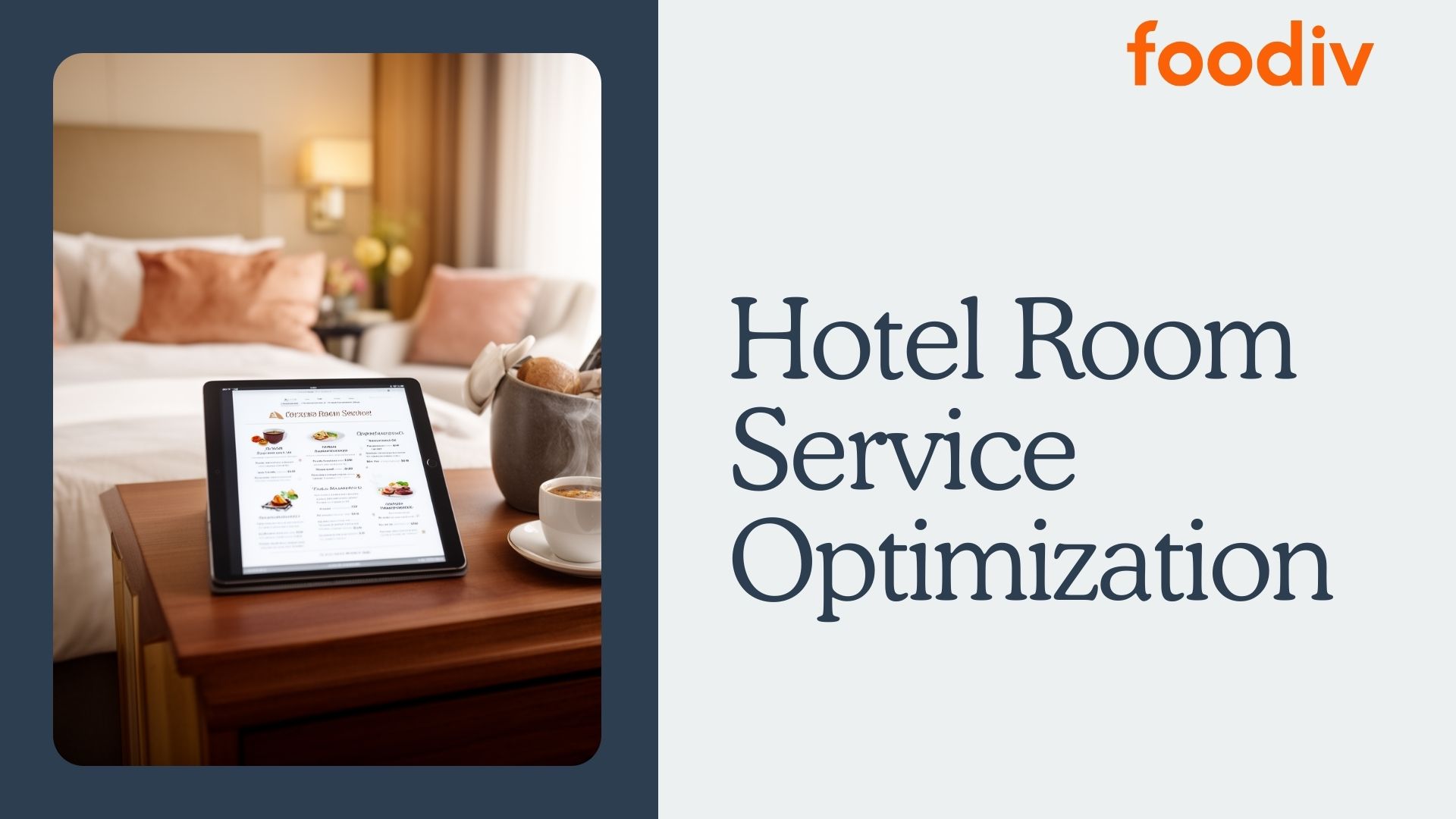
A digital hotel ordering system brings structure to in room dining operations. Instead of relying on phone calls and handwritten notes, guests place orders through a digital interface that sends requests directly to the kitchen.
- Guests place orders directly through a digital menu
- Orders reach the kitchen instantly without manual entry
- Staff track orders in real time through a central dashboard
- Managers gain visibility into the full in room dining workflow
What this really means is that modern in room dining technology removes communication gaps and improves the speed of hotel room service operations.
Enable Mobile or QR Code Room Service Ordering
Many guests prefer ordering from their phone instead of calling the front desk. Mobile ordering and QR code menus simplify the entire process.
- Guests scan a QR code or open a mobile ordering page
- The menu appears instantly on the guest device
- Guests place orders without waiting on the phone
- Orders reach the kitchen system immediately
This approach reduces front desk workload and improves the guest experience by making room service easier to access.
Use a Kitchen Display System for Order Management
Kitchen display systems help kitchen teams manage orders more clearly. Instead of relying on printed tickets, staff see incoming orders on a digital screen.
- Orders appear instantly on the kitchen display
- Kitchen staff track preparation status in real time
- The system organizes orders by preparation time
- Delivery teams receive updates when meals are ready
This improves coordination inside the kitchen and keeps the hotel food service workflow organized.
Automate Payment Processing
Manual billing often creates delays and mistakes. Automated payment processing simplifies this step and reduces errors.
- Guests pay during the ordering process
- Payments connect directly with hotel POS systems
- Staff avoid manual entry and calculation mistakes
- Finance teams track revenue more accurately
Automated payment systems help hotels maintain clear financial records while improving the speed of room service transactions.
Schedule Orders to Manage Peak Demand
Order surges often overwhelm kitchens during breakfast or late night dining. Scheduling tools help hotels manage these spikes.
- Guests select preferred delivery times
- Kitchens receive orders in controlled time slots
- Staff prepare meals without sudden overload
- Delivery teams manage orders more efficiently
Order scheduling creates balance across the hotel food service workflow and prevents operational chaos during busy hours.
Set Delivery Time Windows
Clear delivery windows help hotels manage guest expectations and kitchen workload.
- Guests choose a delivery window when placing the order
- Kitchens prepare food according to scheduled times
- Delivery staff organize routes more efficiently
- Guests receive accurate service timing
This small change reduces delays and improves service reliability.
Use Data Insights to Improve Menu Performance
Room service systems collect valuable data about guest ordering patterns. Hotels can use this information to improve their menus and operations.
- Managers track which menu items sell most often
- Hotels identify slow moving dishes and remove them
- Kitchens plan inventory based on demand patterns
- Hotels adjust menu pricing and promotions
Data insights help hotels refine their in room dining management and improve operational efficiency.
Train Staff for Faster Service Delivery
Technology helps, but trained staff still play a major role in room service efficiency. Clear procedures help teams respond quickly to guest orders.
- Staff understand the full room service workflow
- Kitchen teams follow clear preparation timelines
- Delivery staff coordinate with kitchen updates
- Front desk teams manage guest requests effectively
Well trained teams create smoother coordination across hotel operations.
Personalize Guest Dining Experience
Guests appreciate personalized hospitality services. When hotels tailor room service options to guest preferences, satisfaction improves.
- Hotels recommend popular dishes to returning guests
- Special dietary preferences appear in the ordering system
- VIP guests receive customized dining suggestions
- Guests enjoy faster ordering based on past choices
Personalization strengthens the guest experience and encourages repeat usage of in room dining services.
Integrate Room Service with Hotel Management Systems
Room service works best when it connects with other hotel systems. Integration creates a unified operational environment.
- Ordering platforms connect with property management systems
- Billing information syncs automatically with guest accounts
- Staff track guest requests across departments
- Managers gain full visibility across hotel operations
When these systems work together, hotels maintain better control over room service workflow and deliver more consistent hospitality services.
Conclusion
Room service may seem simple, but many things must work together behind the scenes. Guests expect fast delivery, accurate orders, and a smooth dining experience in their room. When the process runs well, it improves the overall guest experience.
Here is the key point. Efficient room service depends on clear workflows, good coordination between teams, and the right technology. Digital ordering systems, kitchen dashboards, and automated payments help hotels reduce delays and manage hotel operations more smoothly.
The direction is clear. As hotels adopt modern in room dining technology, room service becomes faster, more organized, and easier for both guests and staff. Hotels that improve efficiency today will deliver better hospitality services and stronger guest satisfaction in the future.